Since the last blog post I wrote about my town, I’ve managed to research and learn much more about Marsa’s history. Thanks to the help of L-Għaqda Storika u Kulturali Marsa, and to the fascinatingly interesting articles in their biannual gazette Il-Folju, I discovered a new side to my town, and some new characters too. Did you know that…

The first aircraft which landed in Malta, landed in Marsa in 1918. Marsa was chosen as a landing strip because of its flat plains, as most of the town was not built up at the time. The airplane was a BH9 by G.O. Smith T.M.E.L., and was affectionately called Camel.

The Marsa Race Track was founded by the British, who missed playing their beloved polo matches and were longing for an exotic Little Ascot. Marsa was chosen as the location of the race track and sports grounds because of its vast and flat plains, and ever since, the lower part of Marsa confining with Qormi has been mostly known for horse racing. Many street names in Marsa were named after equestrian terms, such as Triq Derby, Triq it-Tigrija, Triq is-Serkin and Sqaq Ascot. Little Ascot did make its way into Marsa after all!

Well-known Maltese writer Juan Mamo was a Marsa resident for most of his life, residing in Triq Azzopardi. The author who penned the beloved book Ulied in-Nanna Venut fl-Amerika had a small shop on Triq San Tumas, called The Mail Order Dealing Company. He possessed a huge collection of books in English, Italian and French, and he was also proficient in concocting herbal remedies with the aid of his many medicinal books. Although he was born in Luqa, Juan Mamo’s wife was from Marsa, the town where they lived for all their married life. Mamo’s death is shrouded in mystery – he was found lifeless on the cliffs in Zurrieq, three days after he was reported missing.

The remains of a Roman harbour were found at Xatt il-Mollijiet, beneath what is now a derelict, abandoned mess. These ruins date back to the year 218 B.C. Instead of preserving this archaeological discovery, which could shed some more light on life in Malta during Roman times, the ruins were buried once again beneath modern development, giving us Marsin only a glimpse of our own heritage. Marsa has been a vital town in Malta’s commercial and maritime history since ancient times, however it seems that preservation of her venerable heritage is unlikely to ever happen.

Triq Balbi, named after the kind benefactor Lorenzo Balbi, is by far Marsa’s busiest, most bustling street. After the building of the Holy Trinity Church and the convent adjacent to it, Triq Balbi grew into an active, lively street. It houses two convents, the town’s primary school, a MUSEUM centre, a political club, a football club, the Marsa police station, the local band club, and the Għaqda Festi Esterni, not to mention the number of small businesses which line this notable street. Triq Balbi is the metaphorical heart of Marsa – it is the street on which most Marsin vote during elections, where most of us strolled on our way to school, or to MUSEUM, or to buy sweets, or groceries. It is the street where processions pass solemnly and where revelers stagger drunkenly during our festa.
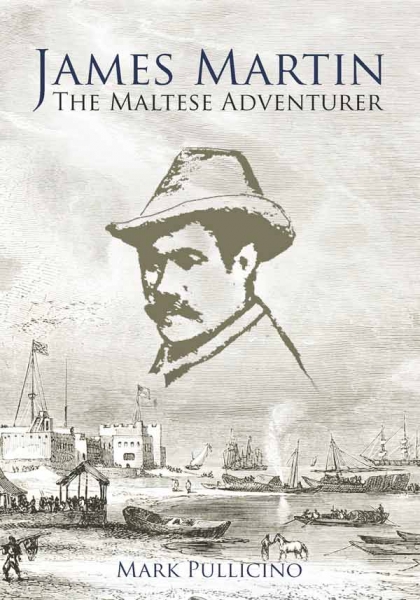
Marsa gave birth to the locally unknown explorer James Martin, who played a small yet vital role in the history of Kenya and Uganda in the 19th Century. Antonio Martino, as he was originally called, was born in Marsa in 1857 to a working class family who lived by the harbour. Fascinated by the ships he grew up with due to his family’s proximity to the harbour, he embarked on a seafaring career at the tender age of 13. During his maritime travels he changed his name to James Martin, an English sounding name which guaranteed his protection by the British crown. He eventually started working for the British monarchy on the exploration of East Africa. The people of Kenya are said to have considered him as a more understanding figure than the British officials, and they managed to strike deals with his help. Although he was probably dyslexic, he learnt several African languages, including Swahili.
From Il-Folju, the biannual gazette issued by the Għaqda Storika u Kulturali Marsa, and James Martin The Maltese Adventurer by Mark Pullicino.
 Notebook